Back To The Roots. – From Stardust To Super StarDust -…
Despite retaining the core gameplay that made the first game so enjoyable, Super Stardust pushed the series forward with improved graphics, enhanced presentation, and a more refined overall experience, making it one of the standout shooters on the Amiga platform.
Back To The Roots. – From Stardust To Super StarDust -…
When I posted my article about Super Stardust HD a few days ago, several readers argued that it had little in common with the original Amiga classic and that the title was the only link between the two games. Ironically, those comments inspired me to dig deeper into the series’ history, so thanks to everyone who challenged my perspective and motivated me to write this post.
Back To The Roots. – From Stardust To Super StarDust –
Back To The Roots. – From Stardust To Super StarDust –
Back To The Roots. – From Stardust To Super StarDust –
Back To The Roots. – From Stardust To Super StarDust –
Back To The Roots. – From Stardust To Super StarDust –
Back To The Roots. – From Stardust To Super StarDust –
First of all, the GIFs above are from the first game in the series, Stardust. There are a few things that make this game stand out from the rest of the series:
Animated backgrounds. This isn’t a huge difference, as the animations are fairly subtle, but it’s still worth mentioning.
A separate weapon menu. The weapon system is accessed through its own menu, and the game features a larger variety of weapons than the later entries in the series.
Bonus missions. These take the form of maze-like stages that provide a nice break from the main gameplay.
Graphically, Stardust is quite similar to the other games in the series. The core gameplay revolves around blasting asteroids, and some of the bosses even appear in later games, albeit in much more advanced and elaborate forms.
There are also several features that are unique to the first two games and were not carried over to the PlayStation-era titles:
The progression and level-loading menu system.
Warp tunnels, where you fly through tunnel-like environments while shooting enemies.
Bonus missions, featuring a variety of gameplay challenges that work surprisingly well.
Intro sequences. In my opinion, the first game has the best intro in the entire series.
Static level backgrounds during standard stages (bonus stages use different visuals).
A fully rendered animated opening cinematic.
A Star Wars-style scrolling text intro used to tell the story.
While the PlayStation games introduced many new ideas and modernized the formula, the foundations laid by Stardust and Super Stardust are still clearly visible throughout the series. The gameplay, visual style, and overall feel remain remarkably consistent, despite the technological leaps between generations.
The sequel arrived a little over a year after the original game and was a huge upgrade to what was already an excellent title. Unlike its predecessor, Super Stardust was developed exclusively for the Amiga’s AGA chipset and featured a higher screen resolution, giving it a much more polished and visually impressive appearance.
Another notable change was the publisher. While the original Stardust was published by DAZE, Super Stardust was published by Team17, a company that was already well known among Amiga gamers for its high-quality releases.
Despite retaining the core gameplay that made the first game so enjoyable, Super Stardust pushed the series forward with improved graphics, enhanced presentation, and a more refined overall experience, making it one of the standout shooters on the Amiga platform.
Back To The Roots. – From Stardust To Super StarDust –
Back To The Roots. – From Stardust To Super StarDust –
Back To The Roots. – From Stardust To Super StarDust –
Back To The Roots. – From Stardust To Super StarDust –
Back To The Roots. – From Stardust To Super StarDust –
Back To The Roots. – From Stardust To Super StarDust –
There was more to it than just improved graphics. Super Stardust was also a much more accessible game. The original Stardust was notoriously difficult, while the sequel offered a better-balanced challenge. It was still a tough game, but it felt fairer and more rewarding to play.
Super Stardust also introduced several new features and improvements that would not appear elsewhere in the series:
Dual-layer tunnels, which looked even more impressive than those in the original game.
A reduced difficulty level, making the game more approachable without sacrificing the challenge.
An overhauled boss lineup, with some bosses from the first game replaced by larger and more memorable encounters.
An improved weapon system, offering more strategic options during gameplay.
Hard drive installation support, a welcome convenience for Amiga users.
Loading screens featuring music and information to read while waiting.
Enhanced bonus missions, with more variety and improved visuals.
The CD32 version included a fully rendered 3D intro and additional cutscenes, adding even more presentation value.
While Super Stardust retained everything that made the original so enjoyable, it refined nearly every aspect of the experience. Better visuals, improved presentation, a more balanced difficulty curve, and numerous gameplay enhancements combined to create what many consider one of the finest shooters ever released for the Amiga.
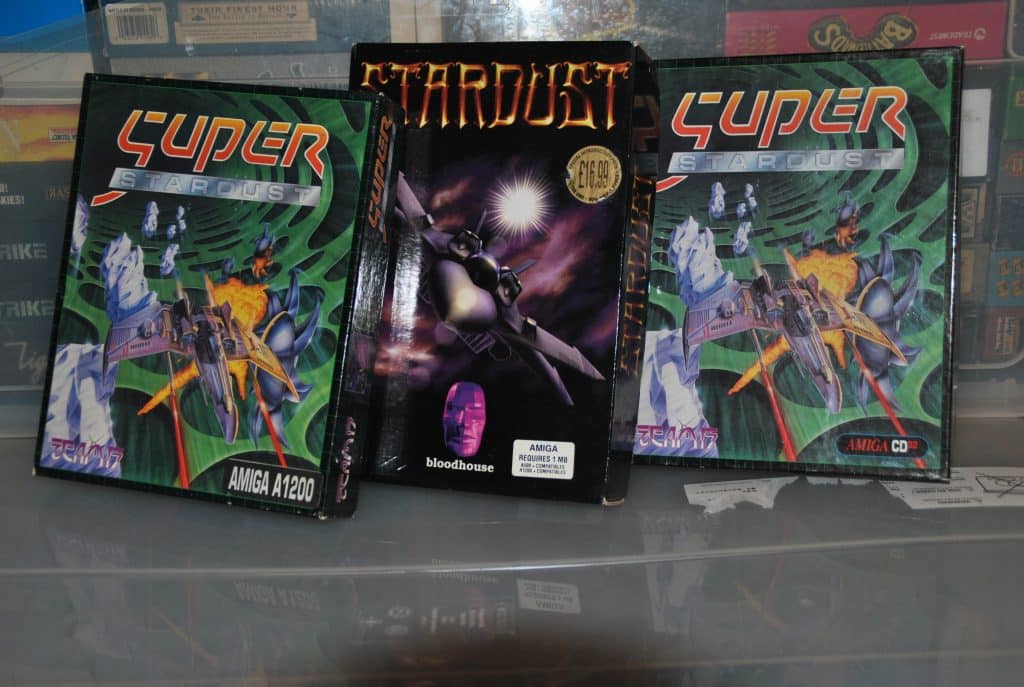
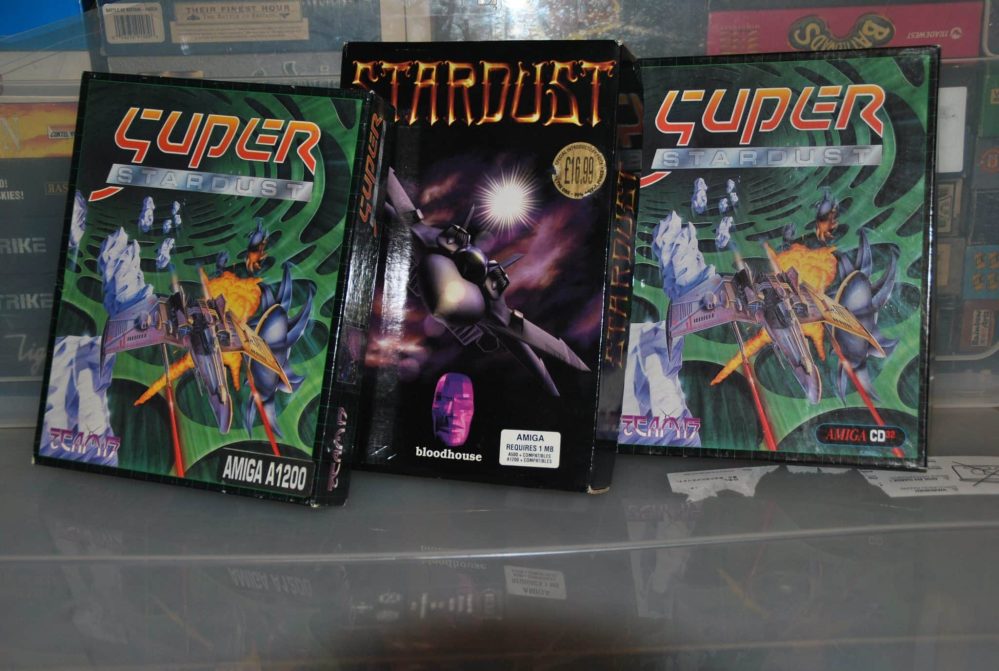
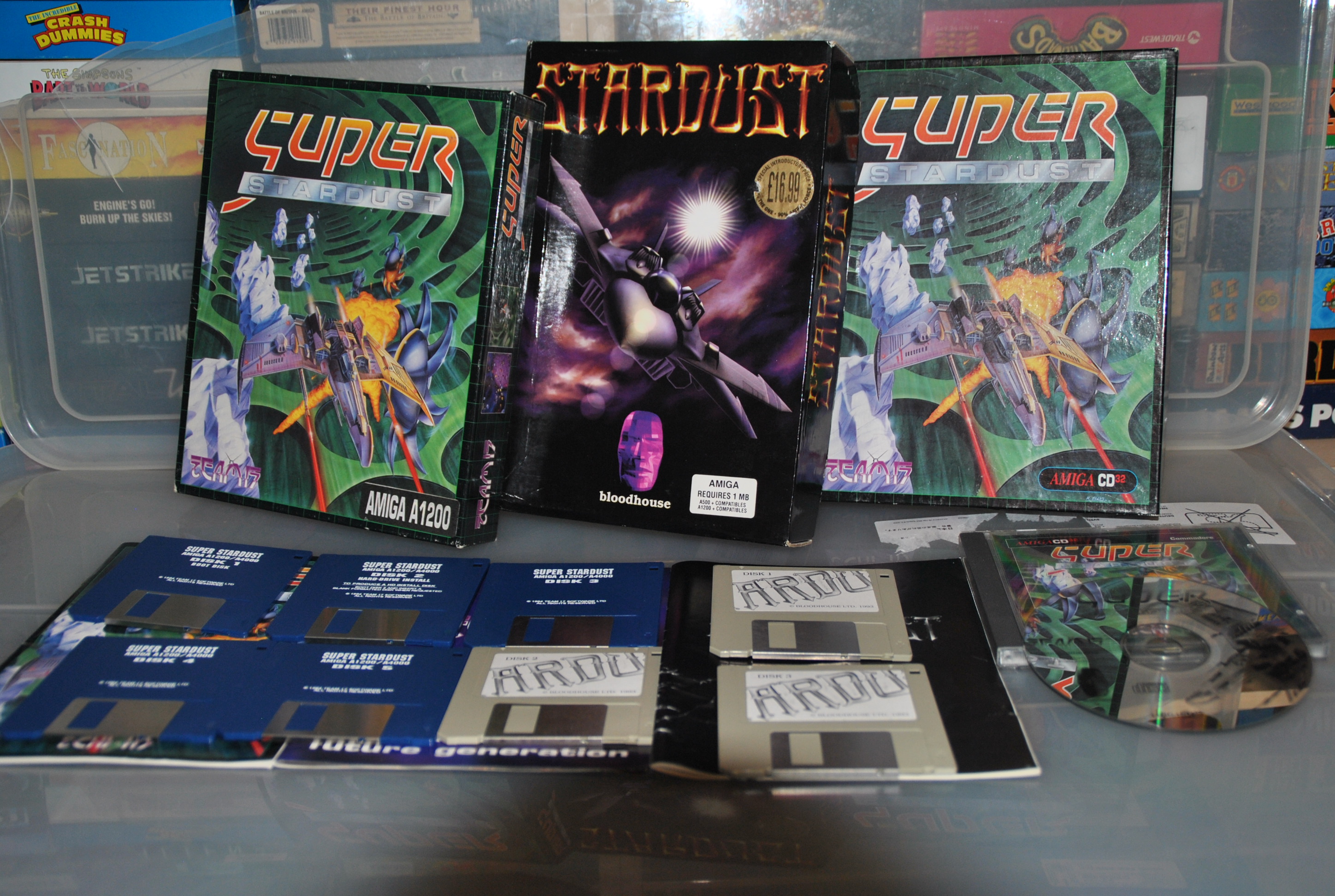
My Stardust games have seen plenty of use over the years, so they’re looking a little worn these days. It’s a shame in one sense, but that’s what happens when you actually play your games. I’ve always believed games are meant to be enjoyed, not left sitting on a shelf, and that’s exactly what I’ve done with these.
So, let’s move on to the things that all Stardust games have in common:
The name.
The music.
The boss designs.
Asteroids.
Spinners.
Worms.
Followers.
Bombers.
The core weapons and power-ups, including the Flamer, Ice, and Shield.
Level and planet designs, with many recurring themes, including a familiar final stage.
The developers, who have remained closely connected to the series throughout its history.
References to the Amiga, which can be found in every version of the game.
The same fundamental gameplay formula, which has evolved with each release while staying true to its roots.
There are probably even more similarities that I’ve overlooked, but by now it should be clear that the games share far more than just the name. The series has certainly evolved over the last twenty years, but it has done so without losing the identity that made the original games so memorable in the first place.

















One Game to rule them all